4 mins Read
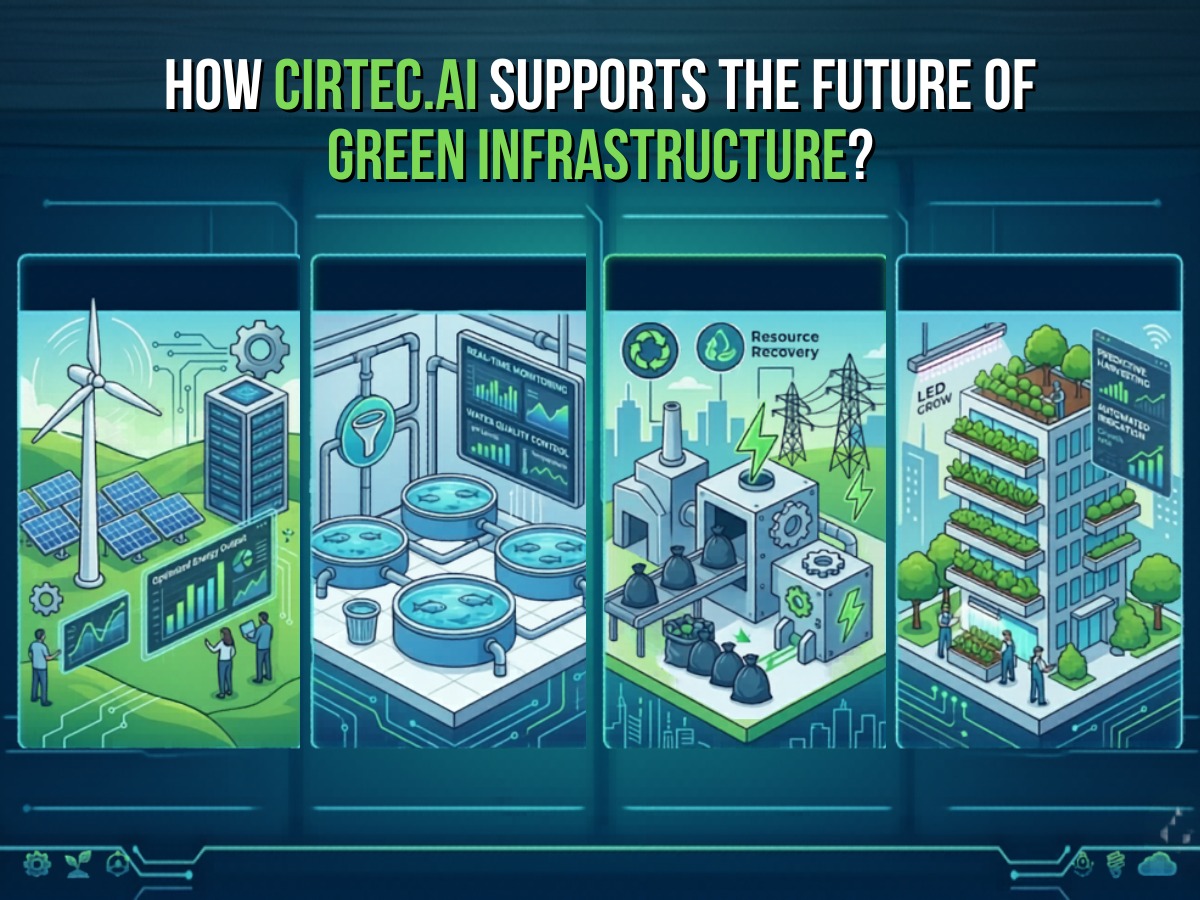
Green infrastructure is all about rethinking the way we design, build, and manage the spaces around us so they work better for people, businesses, and the environment.
At its core, green infrastructure uses natural systems like plants, soil, water, and open spaces to solve real urban problems. For example, it can help manage rainwater, reduce flooding, improve air quality, and bring down heat in crowded city areas. Instead of working against nature, green infrastructure uses nature as part of the solution.
But today, green infrastructure is no longer just about physical spaces. Technology is becoming a big part of it too.
With better data, smarter tools, and AI-powered insights, cities and businesses can make more informed decisions about sustainability. This is where Cirtec.AI becomes relevant.
How AI and Data Make Green Infrastructure Smarter
In the past, green infrastructure planning depended mostly on manual research, design experience, and long-term observation. While that is still important, technology has made the process much more accurate and practical.
CarbonZeroed, now known as Cirtec.AI, reflects this shift toward smarter sustainability solutions. Instead of only focusing on tracking emissions, Cirtec.AI helps organizations understand environmental data and use it to take better action.
This can support businesses and planners in measuring carbon emissions more accurately, identifying areas where resources are being wasted, improving efficiency, and working toward sustainability or net-zero goals.
In simple terms, Cirtec.AI helps turn complex environmental data into useful insights. And that is important because sustainability decisions should not be based on guesswork. They need to be backed by clear information.
Why Green Infrastructure Matters Today
Cities are growing quickly, and that brings a lot of pressure. More buildings, more traffic, more energy use, and more pollution all affect the way people live. At the same time, problems like heatwaves, water shortages, and flooding are becoming harder to ignore.
Traditional infrastructure alone cannot handle all these challenges. Green infrastructure offers a more balanced way forward. When green infrastructure is combined with AI and data-driven tools, the results can be even stronger.
Businesses, city planners, and communities can understand what needs improvement and take action in a more focused way.
Conclusion
The future of infrastructure will not be only about concrete, steel, and roads. It will also be about sustainability, smarter planning, and better use of technology.
Green infrastructure is becoming more important because it helps create spaces that are practical, healthier, and more responsible.
In the end, green infrastructure is not just about making places look greener. It is about building better systems that support a cleaner and more sustainable future. For more information, visit Cirtec.AI or reach out directly at sales@cirtec.ai.
Ready to take the next step toward a more efficient and responsible business model?
Discover how CIRTEC.ai helps organisations track, manage, and reduce emissions while improving operational performance.
👉 Visit CIRTEC.ai to begin your carbon management journey.Also, follow us on LinkedIn:
Stay informed about practical approaches to carbon reduction, evolving regulations, and real-world business strategies. Be part of a growing network focused on measurable progress.
👉 CIRTEC.ai LinkedIn Profile