6 mins Read
For most organisations, emissions data is captured post-performance, reports are produced months later, and decisions are made using information that is already outdated.
While this may satisfy compliance requirements, it does little to support businesses that want to plan ahead, adapt, or actively reduce emissions.
This is where AI begins to play a meaningful role, particularly in carbon footprint forecasting and long-term sustainability planning.
AI allows organisations to treat carbon data as dynamic, predictive, and actionable, rather than purely backward-looking.
Shifting the Focus from Static Data to Foresight
Traditional carbon accounting relies heavily on periodic reporting. Data such as energy consumption, travel, and supply chain activity is collected, recorded, and reviewed long after emissions have already occurred. This delay leaves little room to anticipate future outcomes or respond proactively.
AI transforms this model by analysing large volumes of real-time and historical data simultaneously. Through machine learning, AI systems can identify patterns in electricity usage, operational behaviour, logistics, and procurement.
Based on these insights, AI can forecast future emissions across different scenarios, such as seasonal demand surges, business growth, supply chain changes, or new regulatory requirements.
This predictive capability enables sustainability teams to ask better, more forward-looking questions:
- What will our carbon footprint look like if production increases by 20 percent?
- How would emissions change if we switch suppliers over the next three years?
- If no action is taken, where are emissions most likely to increase?
Instead of reacting to problems after they occur, organisations can plan in advance.
Scenario Analysis for Long-Term Planning
One of AI’s strongest capabilities lies in scenario modelling for sustainability planning. Many long-term decarbonisation strategies are still built on assumptions rather than realistic projections.
AI allows organisations to evaluate multiple pathways at the same time. It can model the emissions impact of investing in renewable energy versus improving energy efficiency, compare different transport modes, or assess alternative supply chain structures. These are not abstract exercises. They are grounded in live operational data.
As a result, leadership teams can better balance sustainability ambitions with business realities. Targets become more achievable because they are based on informed projections, not best-case assumptions.
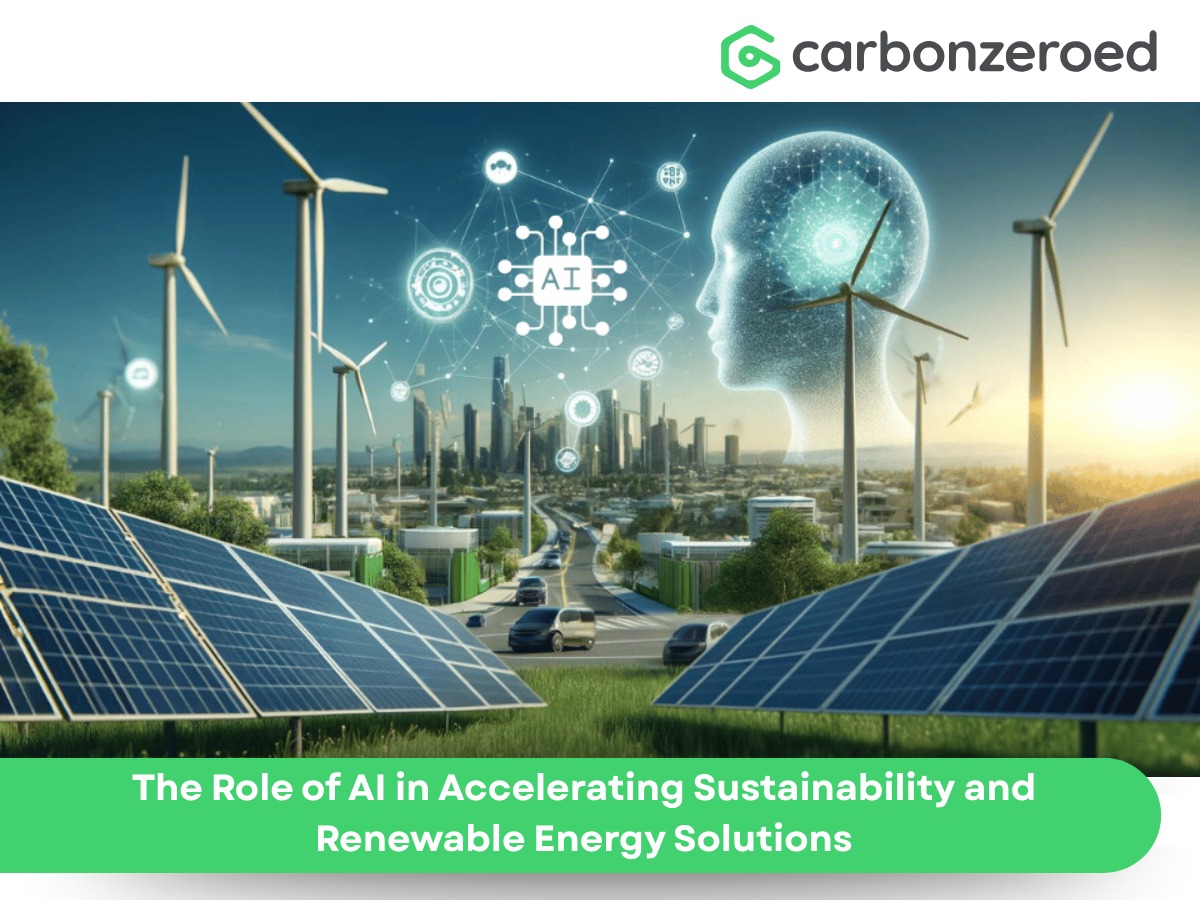
You may also read: The Role of AI in Accelerating Sustainability and Renewable Energy Solutions
Improved Decision-Making Across the Organisation
Emissions reduction is rarely owned by a single department. Finance, operations, procurement, and strategy teams all influence emissions, often without realising it. AI helps make carbon data visible, relevant, and usable across the organisation.
By continuously monitoring emissions-related activity, AI can identify inefficiencies as they emerge, such as unexpected increases in energy use, underperforming assets, or processes that consistently generate higher emissions. Over time, the system learns what “normal” looks like and highlights deviations that require attention.
Sustainability, in this way, becomes part of everyday operational decision-making rather than a compliance obligation.
Supporting Regulatory Preparedness and Transparency
Carbon reporting requirements are becoming more demanding and complex. Many organisations struggle to keep up because their data is fragmented and heavily reliant on manual processes.
AI supports regulatory readiness by automating data collection, validation, and analysis across multiple sources. This reduces errors, improves consistency, and strengthens audit readiness. Beyond reporting, AI-driven forecasting helps organisations understand how future regulations could affect their emissions profile and costs.
This foresight is especially valuable in sectors facing frequent policy changes.
Continuous improvement, not “report and move on”
Perhaps the most significant shift AI introduces is a change in mindset, moving from annual reporting to continuous carbon management. When emissions are tracked and analysed in near real time, even small operational changes can be assessed and refined quickly.
Over months and years, these incremental improvements compound. AI helps organisations understand what is working, what is not, and where the next opportunity lies well before the next reporting cycle.
Conclusion
Carbon accountability is not about chasing annual reports. It is about having the right data when it actually matters.
With real-time, AI-powered emissions tracking through CarbonCast, sustainability becomes a day-to-day operational priority rather than a retrospective exercise.
As pressure continues to build from regulators, investors, and customers, organisations that adopt real-time carbon intelligence will be better positioned to remain compliant, credible, and competitive. Small improvements, when measured consistently, can add up to meaningful change.
Ready to take the next step towards smarter carbon forecasting and long-term sustainability planning?
Discover how the Carbonzeroed ecosystem helps organisations measure, analyse, and manage emissions using real-time, AI-driven insights.
Visit Carbonzeroed to start your sustainability journey with confidence.Also, follow us on LinkedIn
Stay updated with the latest thinking on carbon intelligence, ESG innovation, and practical sustainability strategies.
👉 Carbonzeroed LinkedIn Profile